
Land or Die Landing Guide
For an in-game landing, enter the approach with the aircraft stabilized and the crew ready for short callouts. Confirm the current objective and cockpit prompts, align with the visible runway, make small corrections, and avoid changing several controls at once near touchdown. This independent Glint Games page was checked on 2026-07-16 and keeps uncertain mechanics, values, rewards, and triggers explicitly source-dated or pending verification.
Advertisement
Land or Die Landing Guide decision table
| Checkpoint | Player action | Evidence status | Why it matters |
|---|---|---|---|
| Step 1 | Before final approach, ask the crew for a fuel, repair, and major-warning status so the cockpit knows which problem can still interrupt the sequence. | Current official or dated source | Keeps the walkthrough decision tied to a visible result instead of an assumed rule. |
| Step 2 | Use the runway center and visible in-game instruments as references, then correct gradually rather than oversteering after every small deviation. | Current observation; verify in game | Keeps the walkthrough decision tied to a visible result instead of an assumed rule. |
| Step 3 | Call each configuration change and wait for confirmation when another role controls a linked system. | Decision rule; no hidden numbers assumed | Keeps the walkthrough decision tied to a visible result instead of an assumed rule. |
| Step 4 | After touchdown or failure, name the earliest lost phase—alignment, speed, configuration, warning response, or crew coordination—before retrying. | Patch-sensitive; recheck before spending | Keeps the walkthrough decision tied to a visible result instead of an assumed rule. |
The short answer and the boundary of this guide
For an in-game landing, enter the approach with the aircraft stabilized and the crew ready for short callouts. Confirm the current objective and cockpit prompts, align with the visible runway, make small corrections, and avoid changing several controls at once near touchdown.
This page covers a game-only approach checklist, cockpit callouts, configuration checks, corrections, and post-round review. Exact values appear only when a current source supports them. Community posts and creator videos can reveal a useful question or show a route, but they remain observations until the current game state or a stronger dated source agrees. That boundary is especially important for codes, rankings, rewards, hidden triggers, and live-service balance.
- Check: Checked 2026-07-16; use the page date when comparing another guide.
A practical route for the next session
1. Before final approach, ask the crew for a fuel, repair, and major-warning status so the cockpit knows which problem can still interrupt the sequence. Before moving on, capture the visible result and compare it with the intended outcome for Land or Die Landing Guide. If the result is different, return to the preceding step and isolate one variable. The next useful comparison is: Use the runway center and visible in-game instruments as references, then correct gradually rather than oversteering after every small deviation.
2. Use the runway center and visible in-game instruments as references, then correct gradually rather than oversteering after every small deviation. Before moving on, capture the visible result and compare it with the intended outcome for Land or Die Landing Guide. If the result is different, return to the preceding step and isolate one variable. The next useful comparison is: Call each configuration change and wait for confirmation when another role controls a linked system.
3. Call each configuration change and wait for confirmation when another role controls a linked system. Before moving on, capture the visible result and compare it with the intended outcome for Land or Die Landing Guide. If the result is different, return to the preceding step and isolate one variable. The next useful comparison is: After touchdown or failure, name the earliest lost phase—alignment, speed, configuration, warning response, or crew coordination—before retrying.
4. After touchdown or failure, name the earliest lost phase—alignment, speed, configuration, warning response, or crew coordination—before retrying. Before moving on, capture the visible result and compare it with the intended outcome for Land or Die Landing Guide. If the result is different, return to the preceding step and isolate one variable. The next useful comparison is: Before final approach, ask the crew for a fuel, repair, and major-warning status so the cockpit knows which problem can still interrupt the sequence.
Advertisement
Mistakes that make this task harder
Do not present these Roblox controls as real aviation training. The safer correction is to return to a player-visible state and use this test: Before final approach, ask the crew for a fuel, repair, and major-warning status so the cockpit knows which problem can still interrupt the sequence.
Do not chase a perfect score while an unresolved game warning is still active. The safer correction is to return to a player-visible state and use this test: Use the runway center and visible in-game instruments as references, then correct gradually rather than oversteering after every small deviation.
Do not make opposite corrections faster than the aircraft animation can respond. The safer correction is to return to a player-visible state and use this test: Call each configuration change and wait for confirmation when another role controls a linked system.
Do not assume a smooth-landing video uses the same plane, class, difficulty, or update. The safer correction is to return to a player-visible state and use this test: After touchdown or failure, name the earliest lost phase—alignment, speed, configuration, warning response, or crew coordination—before retrying.
Evidence, confidence, and rights handling
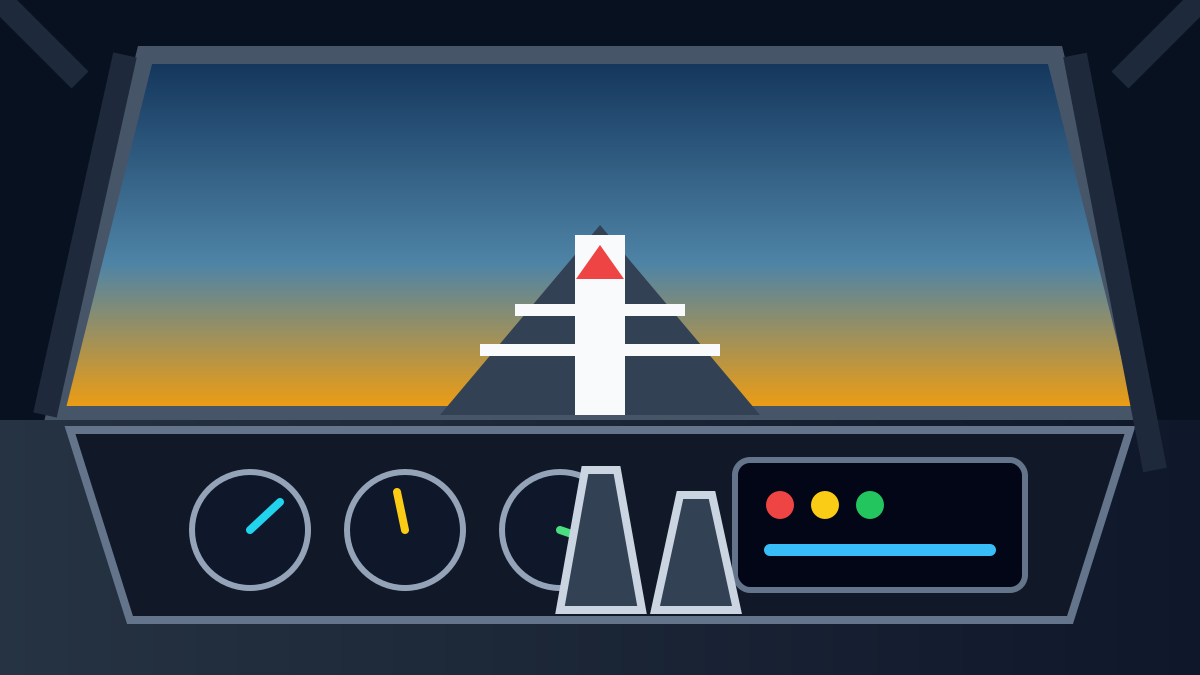
Two current landing videos and a full walkthrough support the phase-based route. Exact keybinds or thresholds that are not visible in the current UI stay pending rather than being fabricated. The linked official or platform pages are the authority for identity and broad feature descriptions. Dated publishers help with narrow tasks. Community and video sources explain player pain or demonstrate a route, but their claims are not silently promoted to official facts. When two sources disagree, the page keeps the disagreement visible and tells the player what to inspect in the current build. The scene at the top is an original Glint Games illustration designed around the co-op airplane survival task; it contains no official logo, named character, copied screenshot, or trade dress. The embedded video is loaded remotely through YouTube’s privacy-enhanced domain.
Video evidence
Land or Die beginner guide
Beginner-oriented task sequencing.
Sources & methodology
Exact identity and co-op premise; official images reference-only.
Dated July 13 codes, Miles, shop path, and developer-server reference.
Competitor structure and terminology reference only; no text or images copied.
FAQ
Is Land or Die Landing Guide official?
No. Glint Games is an independent fan resource and is not affiliated with Land or Die, its developer or publisher, Roblox, YouTube, or the referenced guide publishers.
What should I do when this walkthrough detail conflicts with the game?
Trust the current game state and official patch information first.
Why are some exact numbers or rewards omitted?
The available sources do not support every hidden rate, value, trigger, or reward in the current build. The guide gives a visible comparison method instead of inventing a number that could waste progress.
Where should I go after this Land or Die task?
Use the Land or Die Roblox Guides hub and choose the guide that matches your next task.
Related Pages
Advertisement