
Huss Valley Runner Guide
Use a crossing card with five fields: role, visible threats, primary lane, reachable alternative and first lost option. This is an editorial practice method for reading a match, not a personally tested safe route or a promised win rate.
Advertisement
Read the Runner objective before making the route
Confirm that you are assigned the Runner role in the correct Huss Valley experience by Huss Valley Official. Read the current crossing objective and inspect the visible field. The October community source describes a changing Runner and Chaser match rather than a fixed single-player path. Your plan should begin with the roles and opponents present now, not with a memorized opening from another player's recording.
Set one practice goal for the crossing. You might recognize an approaching Chaser earlier, retain an alternative lane or avoid committing a lateral action toward a boundary. These are observations you can review afterward. They do not require claiming that a route is permanently safe. Keep the goal small enough that a failed crossing still provides useful evidence about the decision you were trying to understand.
Gameplay reference
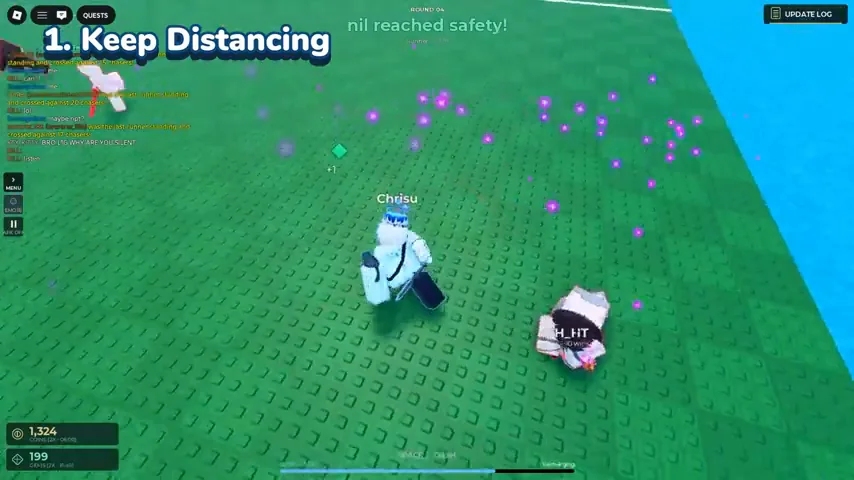
The Runner survival chapter in Chrisu’s October 7 walkthrough. The visible spacing supplies context for inspecting a primary lane and a reachable alternative.
Chrisu · 01:50 · Reviewed 2026-10-14
Inspect a destination and the space after it
Identify the destination required by the current objective, then look at the open space along the route and beside it. Locate the nearest visible Chaser and the direction of the approach. Distance alone does not describe the threat. An opponent facing your chosen lane can constrain it differently from one moving toward another group. Leave uncertainty visible if part of the field is outside your current view.
Think beyond the first movement. Where will you be after a turn or dash, and which option will remain from that position? A technically successful input can place you somewhere with no next move. Check the boundary and other participants before selecting that destination. Use the current match geometry when choosing a route. The attributed gameplay frame records one particular position and opponent arrangement.
Give the primary lane a reachable alternative
Name a main lane and a second place you could reach if the first closes. A useful alternative belongs to the current visible space. If it requires reversing through the nearest opponent, it does not preserve the option you need for that moment. The alternative can be an ordinary open area; it does not need to be a hidden trick or a named location copied from a video.
Reconsider the starting position if both options depend on the same narrow gap. Choosing two labels for one closed route does not create two exits. Look at how another player's movement could occupy the fallback. Then select a plan whose first change of direction still leaves a comprehensible next position. This is route organization advice, not a claim that Glint has tested every arena or found a path that opponents cannot intercept.
Practice the response before relying on timing
The community account describes momentum and lateral movement, so familiarize yourself with the current response in an appropriate low-pressure situation. Observe starting, releasing a direction, changing direction and stopping separately. Read your device's bindings; the desktop combination belongs to the dated controls reference and should not be translated into an invented touch or controller input.
During a crossing, use the response while useful space still exists. Waiting until all reachable lanes close gives a correctly performed movement less room to help. Conversely, an early commitment can make your next destination predictable. Review the situation rather than declaring one universal delay or dash timing. The guide keeps the judgment tied to visible positions rather than exact attack ranges, cooldowns or a frame-perfect technique.
Reassess when the field changes
Update the plan when the Chaser turns, another participant enters your lane or the available space becomes narrower. A crossing is several decisions rather than one line followed without review. Keep the opponent observable when possible, but also notice the boundary and destination. Watching only the threat can hide the simpler problem that your own route is running out of room.
The dated report describes caught Runners joining the opposing side as the match develops. Inspect each visible opponent after a transition. An escape from the closest Chaser may lead toward another. A group can divide attention or reduce your available turning space; separation can create room or expose your line. Neither arrangement is a permanent rule. Choose from the spacing and role state visible in the present match.
Advertisement
Consider an ability after naming the pressure
Read the current Runner shop options and their effects before choosing a purchase. The existing community package describes examples such as Cloak and Pocket Door, but an effect still needs a useful situation. A visibility change is not proof of immunity, and an obstruction needs placement relevant to the approach. Keep current cost, currency and role restrictions attached to the item you actually select.
Finish the sentence explaining which problem the option should address. If the problem is a lane chosen too early or a Chaser lost from view, examine what basic practice can change. If the effect directly supplies an option your plan lacks, choose a small test after acquisition. Keep the action and route otherwise comparable, so a dramatic clip or a lucky match does not become an unsupported claim that the item is universally strongest.
Review the first option you lost
Work backward from the result to the earliest point where another movement ceased to be available. Did the starting lane already face pressure? Did the fallback become occupied? Did a movement reach the boundary? Did a new Chaser appear while you kept watching the old one? Record that first loss of choice before focusing on the final contact that ended the attempt.
The review should identify role, starting position, intended destination, alternative and one change for the next attempt. A short note is enough when it describes a specific observation. Do not infer an undocumented range or a hidden match rule solely because you were caught once. An understandable failed attempt is still useful practice evidence; the next attempt can test the earlier decision without promising a different outcome.
Repeat one change and preserve the source date
Select one adjustment: inspect the field earlier, use a clearer alternative, recognize a second threat or choose a different starting angle. Keep the rest of the plan as comparable as the match permits. Multiplayer conditions will vary, so treat the result as an observation rather than a controlled benchmark. The aim is to improve the clarity of your own decision, not to calculate a win rate from a tiny sample.
Save the role and controls you checked, the source date and the question still unresolved. Return to the beginner page when the role or game identity needs clarification, and to Controls and Abilities when a binding or purchase is uncertain. Refresh live prompts after updates. This Runner guide is an original crossing and review framework supported by dated creator context, with no claim of personal testing, permanent safe lanes or verified current item timings.
Video evidence
Huss Valley Runner movement context
Second creator reference from the existing source package, used for crossing context. Match its position and opponent pressure to the live round rather than copying an input sequence.
Sources & methodology
Correct experience by Huss Valley Official. Identity and developer description rechecked through the Roblox Games API on October 14, 2026; detailed community mechanics are separately attributed.
Updated October 6, 2026; rechecked October 14. Detailed role and movement context is dated community coverage; route choices and review worksheets here are editorial advice.
Official promotional image from the Huss Valley Roblox gallery by Huss Valley Official, checked October 14, 2026. The gameplay figure is a limited, attributed still from the linked Chrisu recording at 01:50; original game art and recording rights remain with their owners.
FAQ
What makes an alternative lane useful?
It must remain reachable from your current route when pressure changes. A fallback that passes through the nearest opponent or ends at the boundary does not preserve a practical next move.
Should I always follow other Runners?
Inspect the actual spacing. A group can split attention while also crowding an exit; a separate lane can offer room while exposing your route.
What should I review after being caught?
Find the earliest point where you lost another option, such as a closed starting lane, missed threat or boundary commitment. Change that decision on the next attempt.
Related Pages
Advertisement