
Transport Fever 3 Campaign Guide
Campaign mode contains historical transport missions. Official sources confirm the mode and its theme, but the opened overview does not provide a complete mission solution list.
Advertisement
Confirmed features
| Area | Official description |
|---|---|
| Campaign | Campaign missions are inspired by historical transport events. |
| Eras | Vehicles and the world evolve through transport history. |
What Campaign is for
The official overview presents Campaign as a sequence of transport missions inspired by historical events. The developer describes these missions as challenges for planning and efficiency. This is a different starting point from choosing a free-form Tycoon company or a creative Sandbox world: Campaign places historical transport tasks at the center of the experience.
History also shapes the simulation
The game description says that vehicles, architecture, industries, people, and cars change with the eras. It covers transport development through the twentieth century and beyond, while allowing players to reshape transport history. These statements describe the setting and available systems; they do not specify the exact order of objectives in an individual mission.
Keep mission-specific advice separate
Use this page to identify the mode and follow its official source. A step-by-step mission page would need the mission name, objectives, recognizable checkpoints, and current evidence for a solution. Those details are not supplied by the overview opened for this guide. No mission reward, hidden objective, or completion sequence has been invented to fill that gap.
Turn the current objective into a checklist
Read the instructions in the active mission before applying a general transport strategy. Copy the objective into your own notes, then separate the requested action, the named locations, and the condition that will indicate completion. This is a player-created checklist, not a list of official mission steps. It keeps the actual assignment in view when a large map offers many attractive construction possibilities.
Mark any uncertainty as a question to resolve in the current interface. If an objective names a cargo, place, or transport type, keep that wording intact rather than substituting a familiar example from another mission. The developer describes historical transport missions, but that broad description does not establish mission names, their sequence, or hidden rewards. Treat the current objective as the source for the task you are trying to complete.
Separate required work from optional experiments
Create two lists: what the mission currently asks for and what you would like to explore on the side. A new station design or a broader transport network may be interesting without directly advancing the objective. Keeping those ideas separate helps you understand why progress has stalled, especially when the map contains several industries or transport opportunities that could draw your attention away from the assignment.
Do not assume that an optional-looking activity is irrelevant either. Check the wording in the game, including any explicit conditions or dependencies it presents. This guide has not verified bonus objectives or their rewards, so it cannot decide that distinction for every mission. Your notes should preserve the difference between something the interface requires, something it offers, and an experiment you invented yourself. That prevents personal exploration from becoming a misleading published walkthrough step.
Advertisement
Work backward from the completion condition
Once you understand the requested outcome, outline the connections that would need to exist for it to occur. Name the destination first, then the preceding movement, and continue back toward the origin. If the task concerns cargo, list the intended material at each handoff. If it concerns a passenger journey or a particular infrastructure arrangement, keep the relevant locations and transport roles visible in the outline.
This backward sketch is a planning technique, not a claim that every historical mission follows one pattern. It can expose a missing connection before construction begins. When the objective includes a condition you cannot yet interpret, pause the plan at that point and inspect the game information. Guessing a production recipe, control sequence, or route length from another title may create more work than resolving the actual requirement would.
Record checkpoints that explain progress
A checkpoint note should describe a meaningful state: the origin is identified, the intended handoff is connected, or the required destination is receiving what the objective requests. Avoid checkpoints such as "built a lot" that do not explain what changed. Use the game's available saving options to preserve recognizable states before major experiments, without assuming a particular file path or backup feature on every platform.
Alongside the checkpoint, write what remains unresolved. If the mission still has not advanced, record the exact completion condition you are waiting for and the evidence you see. This helps distinguish a task interpretation problem from a transport problem. It also gives you a concise account to use when asking for help. The guide supplies no guaranteed checkpoint timing, mission rewards, or hidden trigger list; those would need separate current verification.
Investigate one failed condition at a time
When progress stops, return to the checklist and identify the earliest condition that is still unmet. Inspect the route or chain associated with that condition before rebuilding unrelated parts of the network. The same general systems described elsewhere in the cluster, such as loading and unloading control or station bottlenecks, may guide your investigation, but they do not override a mission-specific instruction.
Keep an observation of the symptom before changing something. State what the next change is intended to resolve, then compare the new state with the earlier checkpoint. If the result is unclear, narrow the experiment. Making several large changes at once may advance the mission while leaving you unable to explain the solution. That distinction matters when you share advice with another player who wants a repeatable route through the same objective.
Choose outside help with the right spoiler scope
Decide whether you want a hint, an explanation of a system, or a complete mission solution before opening a video or discussion. A systems guide can answer a cargo or vehicle question without revealing the sequence of a historical scenario. A walkthrough may show later objectives that you would prefer to discover yourself. The level of help you choose is a reading preference, not a difficulty rule.
Before relying on a solution, check that it names Transport Fever 3, the relevant mission, and its version or publication context. Distinguish demonstrated completion from a speculative plan or a trailer. This cluster currently provides objective-reading and transport-planning support; it does not claim verified mission-by-mission solutions. Where the actual scenario asks for a specific arrangement, use evidence for that scenario rather than treating a general network example as an authoritative answer.
Video evidence
Transport Fever 3 - Vehicle Trailer
Official Transport Fever video, embedded from YouTube with privacy-enhanced playback. The trailer illustrates published features; it is not a performance benchmark or mission walkthrough.
Sources & methodology
Feature descriptions and platform requirements.
Release, publisher, and Windows requirements.
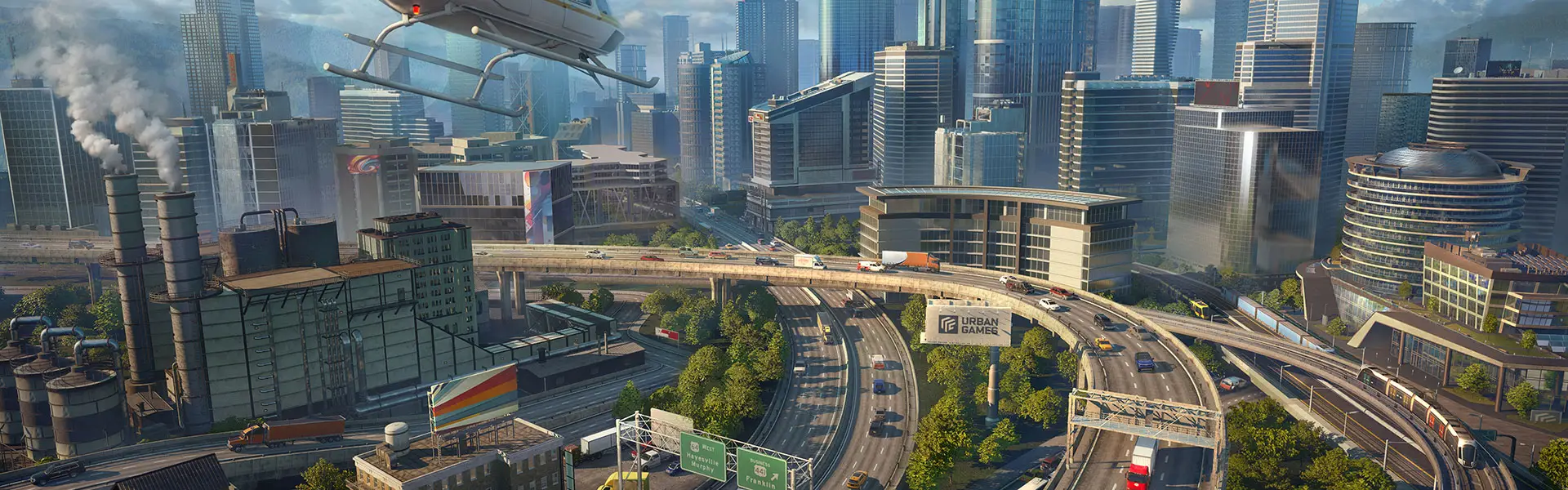
Attributed publisher artwork stored locally. Copyright remains with Urban Games; no ownership or affiliation is claimed.
FAQ
Does this page list every campaign mission?
No. The official overview confirms missions inspired by historical transport events. This page helps organize the active objective without inventing mission names, order, rewards, hidden triggers, or a verified walkthrough.
Can I use a Sandbox design in Campaign?
It can be an idea to investigate, but the campaign objective and its conditions still govern the task. Creative construction under different settings does not prove that the same arrangement completes a particular mission.
Where should I begin if a mission stops progressing?
Identify the first unmet condition in the current instructions, then inspect the connection or action that should satisfy it. Record the symptom and one targeted change before expanding or redesigning unrelated parts of the map.
Related Pages
Advertisement