
Transport Fever 3 Sandbox and Difficulty
Tycoon has adjustable difficulty. The official overview also describes relaxing the challenge or disabling the economy for creative construction in Sandbox.
Advertisement
Confirmed features
| Area | Official description |
|---|---|
| Difficulty | Multiple difficulty options adjust how the world and economy respond. |
| Sandbox | The economy can be disabled for creative construction. |
Match the mode to the objective
Tycoon centers on managing a transport company, connecting towns and industries, and balancing income against vehicle and infrastructure costs. The official overview describes adjustable difficulty, allowing the economy and the world's response to suit different play styles. Contracts and loans are listed among the economic systems, but the source does not publish a universal setting preset or an optimal opening balance.
Creative construction is a supported choice
The developer separately describes Sandbox as a place for unrestricted creative building. The overview explicitly allows the economy to be disabled so players can focus on cities, stations, and dioramas. Treat that as a mode choice rather than an unverified money-making trick. The result you want from a decorative landscape is different from the result you want from a company-management challenge.
Avoid guessing settings names
These notes use the official descriptions of modes and difficulty. They do not claim exact menu labels, default values, or a tested very-hard strategy. Check the current game interface and the linked official source before relying on a setting-specific tutorial.
Decide what the session should teach you
A useful session starts with a question that matches its conditions. If you want to explore a station arrangement or shape a landscape, creative construction may let you concentrate on that design. If you want to understand company management, the economic side of the session is part of the question. Write down the result you want to inspect before treating difficulty as a general measure of how serious the playthrough is.
Keep the scope small enough to interpret. A session that attempts to redesign terrain, test a cargo chain, and evaluate several transport types simultaneously can produce interesting scenes but unclear conclusions. Choose one primary task and keep secondary ideas in a separate note. The official distinction between Tycoon and Sandbox gives you a starting point, while the settings visible in your own session determine the exact conditions you need to record.
Understand what economy-off construction demonstrates
The developer describes Sandbox as a creative mode with an option to turn the economy off. A design made under those conditions can demonstrate a construction idea or a visual arrangement. It does not by itself establish that the same network can cover vehicle, infrastructure, or maintenance costs in a management session. Keep those two interpretations separate when presenting screenshots or giving advice.
If you intend to carry an idea into economic play, make a second plan for the management questions. Identify what the design requires, the costs that need examination, and the transport task it is supposed to serve. Do not call the creative version a money exploit or guaranteed profitable layout. An attractive arrangement may be worth building for its own sake, and it may also need a different scale or sequence when economic constraints matter.
Advertisement
Record settings without inventing menu instructions
Create a small session card containing the mode, economy condition, map, era, platform, game version, and relevant modifications. Add the difficulty choices actually shown in the current game. This page deliberately does not provide guessed menu labels, default values, or a universal preset. A personal record is more reliable than assuming that a guide written for another platform exposes identical controls.
When comparing two sessions, put their cards side by side. Mark every known difference, including the ones that appear unrelated to your experiment. If you cannot establish that the important conditions match, describe the comparison as exploratory. This does not make the observation useless; it limits the conclusion you can draw. A difficulty change may be the question you intended to study while another changed condition also affects what you see.
Make a controlled design experiment
Define the smallest arrangement that answers your question. For a transfer layout, identify the origin, the intended handoff, and the destination. For a map design, identify the corridor or area you want to evaluate. Preserve an understandable baseline with the save options available to you, then record the single design change you plan to make. This is a general method for observing a result, not a verified in-game tutorial sequence.
After the change, compare the observation with the original question. If you were checking visual clarity, describe whether the network is easier to read. If you were checking a movement, describe what arrives and what leaves. Avoid changing the task halfway through and claiming that an unrelated improvement proves success. An experiment is most useful when you can explain both the conditions and the specific result it produced.
Keep loans and contracts in their management context
The official overview describes loans and contracts within company-management play. Their presence tells you that financing and assignments are part of the systems to understand. It does not establish exact interest rates, repayment rules, contract rewards, or a recommended borrowing amount. Read the current terms shown in your session before making a decision based on a generic example or a screenshot from another version.
When a plan depends on financing, note which part of the network the money would support and what transport task that part serves. Keep the financing decision separate from the technical question of whether the route connects the intended places. A route can be mechanically understandable while its management outcome remains uncertain. This guide offers a way to separate those questions; it does not provide financial predictions or a guaranteed contract strategy.
Share designs with enough context to be reusable
When posting a build or asking for help, state whether you used Sandbox and whether the economy was active. Add the map, era, and modifications that matter to the example. This makes it easier for another reader to decide whether the design is relevant to a creative project, a management session, or a campaign objective. A screenshot without that context can accidentally suggest a strategy it has not demonstrated.
If you compare difficulty settings, identify exactly what you compared and what you observed. Do not turn a single outcome into a statement about every map or player. For a specific problem, link the question to the relevant part of the cluster: cargo handling, vehicle selection, map layout, or campaign instructions. Matching the help to the task is usually more productive than asking for a universal difficulty setting that optimizes every kind of session.
Video evidence
Transport Fever 3 - Vehicle Trailer
Official Transport Fever video, embedded from YouTube with privacy-enhanced playback. The trailer illustrates published features; it is not a performance benchmark or mission walkthrough.
Sources & methodology
Feature descriptions and platform requirements.
Release, publisher, and Windows requirements.
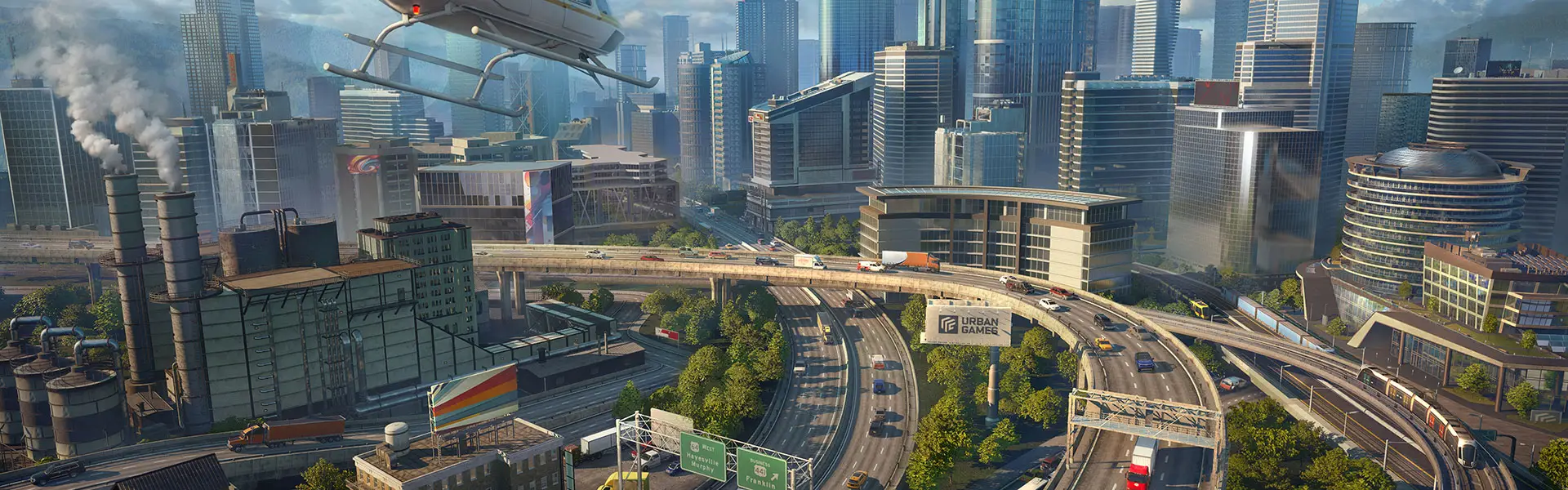
Attributed publisher artwork stored locally. Copyright remains with Urban Games; no ownership or affiliation is claimed.
FAQ
Can the economy be disabled in Sandbox?
The official overview describes that option. Check the current interface for the available controls on your platform. The option supports creative construction; it does not demonstrate a profitable company-management strategy.
Which difficulty is best?
The published features do not establish one universal choice. Decide whether you want creative freedom, company management, or a particular learning task, then record the settings actually used so later comparisons have useful context.
Does this guide give loan rates or contract rewards?
No. It identifies loans and contracts as published management features. Exact terms, requirements, and rewards must be read from the current game and any advice should be tied to those conditions.
Related Pages
Advertisement