Hider strategy

MECCHA CHAMELEON Hider Tips

Good Hider play is a mix of paint, pose, silhouette, timing, and map choice. Use these tips as a checklist after every round: what revealed you, what fooled the Seeker, and what should change next time?

MECCHA CHAMELEON official Steam screenshot highlighting hiding and movement space.
A Steam screenshot reference for Hider tips, silhouettes, and risky movement lines. Source: official Steam store.

YouTube video links

Watch hiding examples and tips videos

These are external YouTube links rather than autoplay embeds, so the page stays fast while still giving visitors a direct trailer, gameplay, or tutorial path.

1

Tip: Match the largest background color first, not the tiny details.

Why it works

Seekers usually notice big contrast before they notice small texture errors.

Common mistake

New Hiders spend too long painting small objects while their body outline still screams player.

Seeker counter

Seekers should scan for human-sized blobs even when the color roughly matches.

2

Tip: Break your silhouette by hiding beside clutter, edges, or uneven props.

Why it works

A perfect human outline is easier to identify than a messy shape attached to existing scenery.

Common mistake

Standing in the middle of a flat wall because the color looks correct.

Seeker counter

Check places where clutter creates too-convenient cover for one extra body shape.

3

Tip: Stop moving earlier than you think you need to.

Why it works

Last-second motion is more visible than a slightly imperfect paint match.

Common mistake

Trying to improve one more detail after the Seeker route has already started nearby.

Seeker counter

Seekers should pause after entering a room and watch for micro-movement before sweeping.

4

Tip: Use shadow edges and transition zones instead of bright clean surfaces.

Why it works

Edges hide imperfect coloring and make depth harder to read at a glance.

Common mistake

Picking the prettiest or most obvious corner that every beginner tries first.

Seeker counter

Sweep corners second; first check transitional areas where color and shape both shift.

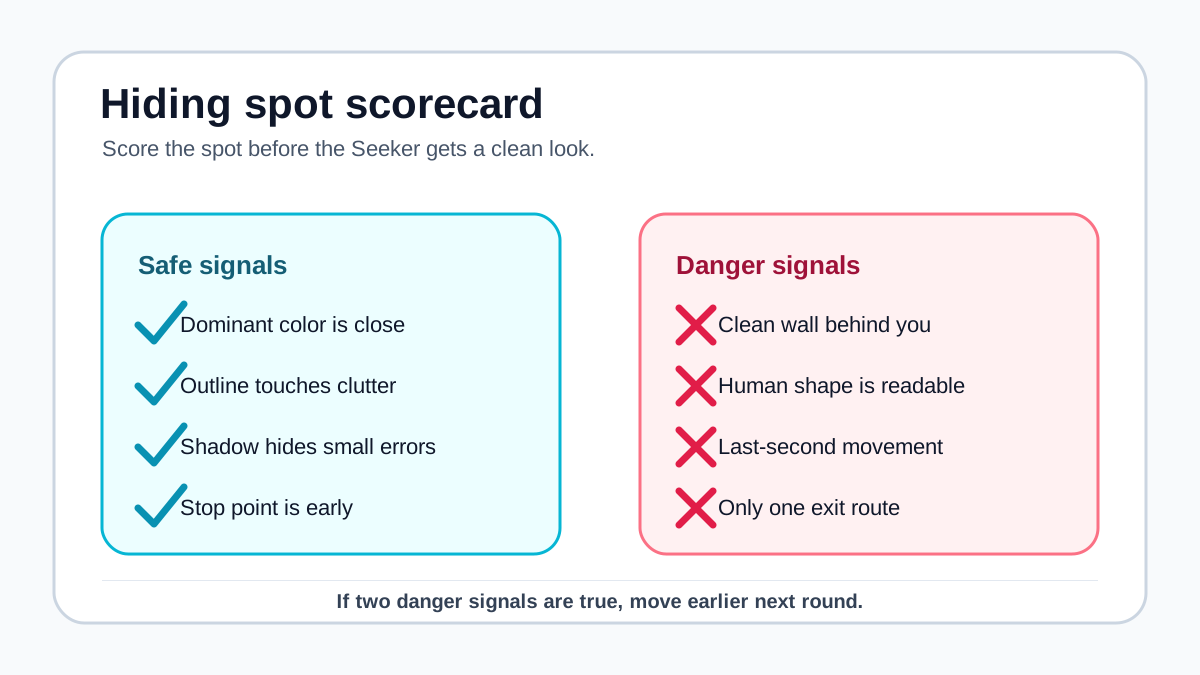
MECCHA CHAMELEON hiding spot scorecard with safe and risky hiding signals.
Use the scorecard after each round to decide whether the loss came from color, outline, motion, or route choice.

How to grade a hiding spot

A hiding spot is strong when several signals agree. Color alone is weak. Color plus clutter, shadow, a broken body outline, and an early stop point creates a spot that forces the Seeker to spend real time confirming you.

Green light

At least three safe signals are true and no danger signal is obvious. Commit and stop moving.

Yellow light

The color works, but the outline or route is risky. Use only if the Seeker route is far away.

Red light

Clean wall, readable body shape, or late movement. Leave earlier next round.

Hider warm-up routine

  1. Before hiding, identify the room’s dominant color and the largest repeated shapes.
  2. Pick a spot where color, shape, and shadow all help you instead of relying on one factor.
  3. Stop moving before the Seeker enters your scan lane.
  4. After the round, write down whether you lost to motion, color, outline, or a predictable spot.

After-round review prompts

Did the Seeker see movement before they saw color?
Was your outline separated from nearby props?
Did you hide in the most obvious beginner corner?
Could a shadow edge or clutter group have hidden the same color mistake?
Did your route force you to cross a long open lane?
Would the same spot still work if the Seeker entered from the other side?

Three drills for better hiding

Drill one is the color-only drill. Pick a room and choose a spot based only on the dominant background color. After the round, ignore whether you survived and ask whether the first color decision was correct. This teaches you not to over-focus on tiny paint details before the big contrast problem is solved.

Drill two is the silhouette drill. Choose a spot where your body touches clutter, a frame, a shelf, a shadow boundary, or another shape that breaks the outline. If the Seeker finds you, decide whether they saw movement or whether the body shape was readable even while still. This drill matters because many new Hiders think they lost to color when they actually lost to shape.

Drill three is the early-stop drill. Pick a safe-looking spot, then stop adjusting earlier than feels comfortable. Late micro-movement is one of the easiest Seeker signals. If you survive more often while making less final movement, the problem was not your paint quality; it was timing.

Failure diagnosis table

Found immediately

Your spot was probably obvious from the doorway. Try clutter or shadow edges instead of clean corners.

Found after a pause

The Seeker likely noticed a silhouette or color mismatch. Improve shape before improving detail.

Found while moving

The original spot may have been good enough. Stop earlier and accept a small imperfection.

Found on every map

Your route or timing pattern may be predictable. Change room order, not just the final spot.

Safe but boring

If nobody checks your area, the spot is hidden but may not teach much. Try a slightly riskier room next round.

How to avoid becoming predictable

The best Hider spots get weaker when you repeat them every round. If your friends or public lobby players see you survive in one corner, assume that area will be checked earlier next time. Rotate between a safe clutter spot, a shadow-edge spot, and a slightly riskier mid-room spot so Seekers cannot solve your pattern from memory. The goal is not to find one perfect location; it is to build a decision habit that works when the map, Seeker route, and lobby skill level change.

In friends lobbies, ask the Seeker what made them check your area. If the answer is movement, fix timing. If the answer is outline, pick better clutter. If the answer is “you always hide there,” change your route before changing your paint. Predictability is often easier to punish than a small color mismatch.

FAQ

What should I match first as a Hider?

Match the largest background color and shape first. Tiny details matter less than avoiding a big contrast blob or obvious human silhouette.

Are corners good hiding spots?

Only sometimes. Corners are predictable. A corner with clutter, shadows, and silhouette breakup is safer than a clean empty corner.

When should I stop moving?

Stop before the Seeker enters or turns toward your area. Late micro-movement often reveals a spot that might otherwise pass.

How do Seekers counter Hiders?

Seekers look for movement, human-sized outlines, repeated props that seem off, and color mismatches in shadow or edge zones.

Official source and disclaimer

This is an unofficial fan guide for MECCHA CHAMELEON. All game names, trademarks, and assets belong to their respective owners. Buy the game from the official Steam store.

Open the official Steam store →