
Steam Store API / store page
Use: Official release, price, app identity, reviews, and purchase path.
Status: Used as the verified source of truth for public facts.
Unofficial fan guide
Learn how to play MECCHA CHAMELEON, check live Steam player count, find beginner-friendly hiding spots, and improve as both Hider and Seeker.

Steam activity
Checking Steam current-player API…
YouTube video links
These are external YouTube links rather than autoplay embeds, so the page stays fast while still giving visitors a direct trailer, gameplay, or tutorial path.
Channel: Niche Gamer Trailers
Short trailer-style overview for visitors who want to see the game before reading the guide.
Watch on YouTube →GameplayChannel: MoistCr1TiKaL Gaming
Long gameplay session useful for seeing public-round pacing, reveals, and lobby feel.
Watch on YouTube →GameplayChannel: CaseOh
Creator gameplay link that helps visitors understand why the game is getting attention.
Watch on YouTube →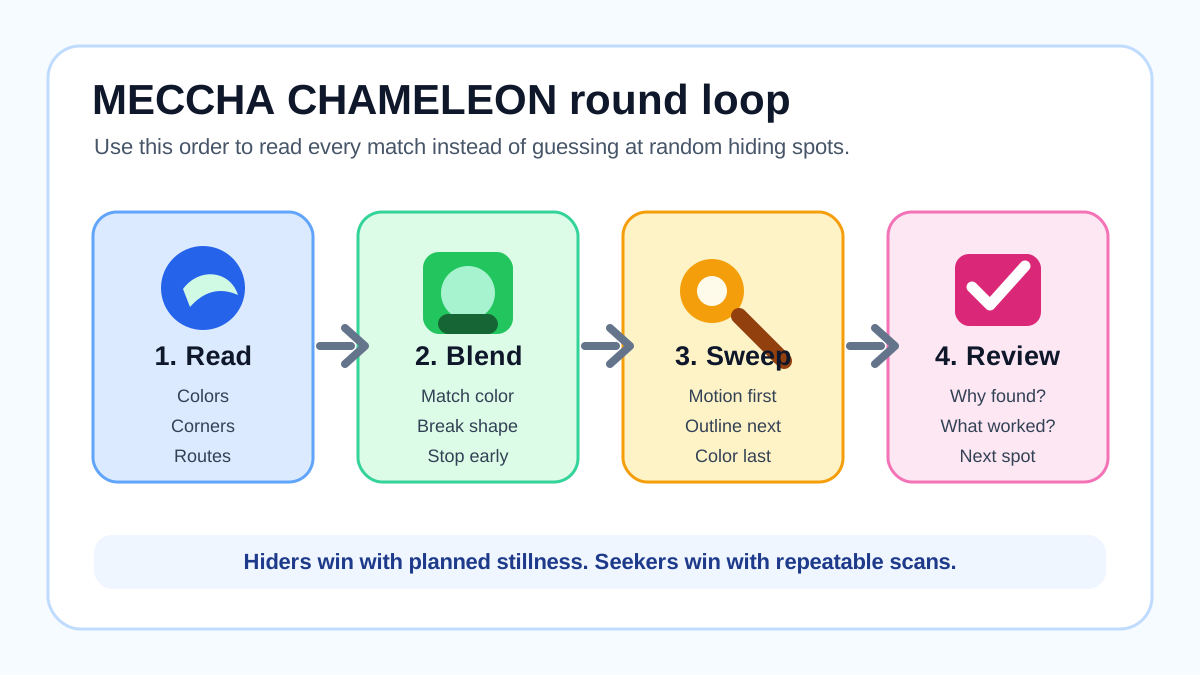
Use the cluster by task
The Steam page answers price, reviews, release details, and official media. This hub answers the search tasks that players usually ask after seeing the game: whether enough people are online, how the Hider loop works, how to avoid obvious hiding spots, and which map patterns create fair rounds.
The first version stays narrow on purpose. It publishes the P0 pages that can be verified from public game facts and role logic, while exact map pages, Workshop rankings, and Seeker-specific guides wait for player data or Search Console impressions.
Check current Steam activity, server-status signals, and whether public matches should be findable.
Learn the Hider vs Seeker loop, painting, posing, friends lobby flow, and beginner mistakes.
Practical hiding, painting, silhouette, timing, and anti-Seeker tips for new Hiders.
Map-pattern guide for safer hiding spots, route planning, Workshop maps, and future map pages.
MECCHA CHAMELEON is a multiplayer party hide-and-seek game on Steam. The useful search task is not just “what is this game,” but how to survive a round, how to read maps, and whether enough players are online for public matches or friend lobbies.
The core tension is role-based: Hiders need to blend into the environment through color, shape, timing, and pose discipline. Seekers need to scan rooms, spot broken silhouettes, and punish late movement without wasting the whole round on every corner.
This cluster is rebuilt as a data-backed task system, not a loose article set. Public Steam facts support the MVP pages today; Google Search Console and GA4 should decide which P1 pages are worth building after launch.
Use: Official release, price, app identity, reviews, and purchase path.
Status: Used as the verified source of truth for public facts.
Use: Live player activity card and fallback activity explanation.
Status: Client-side live check with labeled fallback snapshot.
Use: Community reports, map demand, and future Workshop map expansion.
Status: Linked as official/community source; not scraped into production yet.
Use: P1 expansion triggers from impressions, CTR, and ranking positions.
Status: Planned after production launch; requires owner-approved API access.
Use: 7-day review loop for engagement, scroll, and Steam outbound clicks.
Status: Measurement ID exists in site config; event/API review still needs approval.
Official visual reference

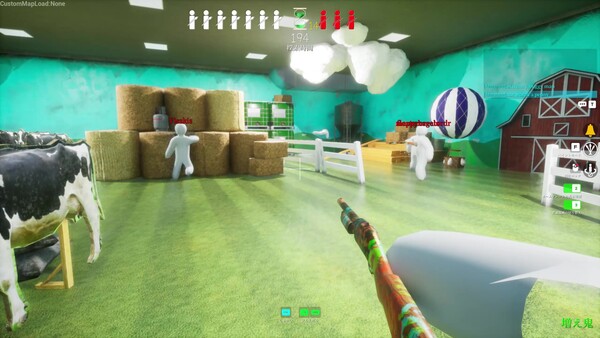

This first version focuses on tasks that can be answered without copying copyrighted screenshots: live activity, rules, Hider execution, and map-pattern logic. If Google Search Console shows impressions for exact maps, Workshop picks, Seeker tips, or multiplayer errors, those should become the next P1 pages.
The cluster is built around five different search jobs, so each URL has a reason to exist. The hub explains what the game is and routes visitors to the right task. The player-count page answers whether the game looks active enough to buy, queue, or plan a friends lobby. The how-to-play page turns a new visitor into someone who understands the round loop. The Hider tips page helps players diagnose why they keep getting found. The maps page gives a safe structure for hiding spots without inventing exact map names or copying official media.
Broad query capture, quick facts, official source link, and routing to the four support pages.
Activity decision page for players deciding whether public matchmaking is worth trying now.
Beginner onboarding page for rules, roles, round order, and first-session mistakes.
Retention page for players who already tried the game and need practical improvement.
Expansion bridge for hiding spots, Workshop pages, and future tested map-specific content.
Seeker tips, exact hiding spots, Workshop maps, review intent, and multiplayer troubleshooting.
Pre-launch SEO gate
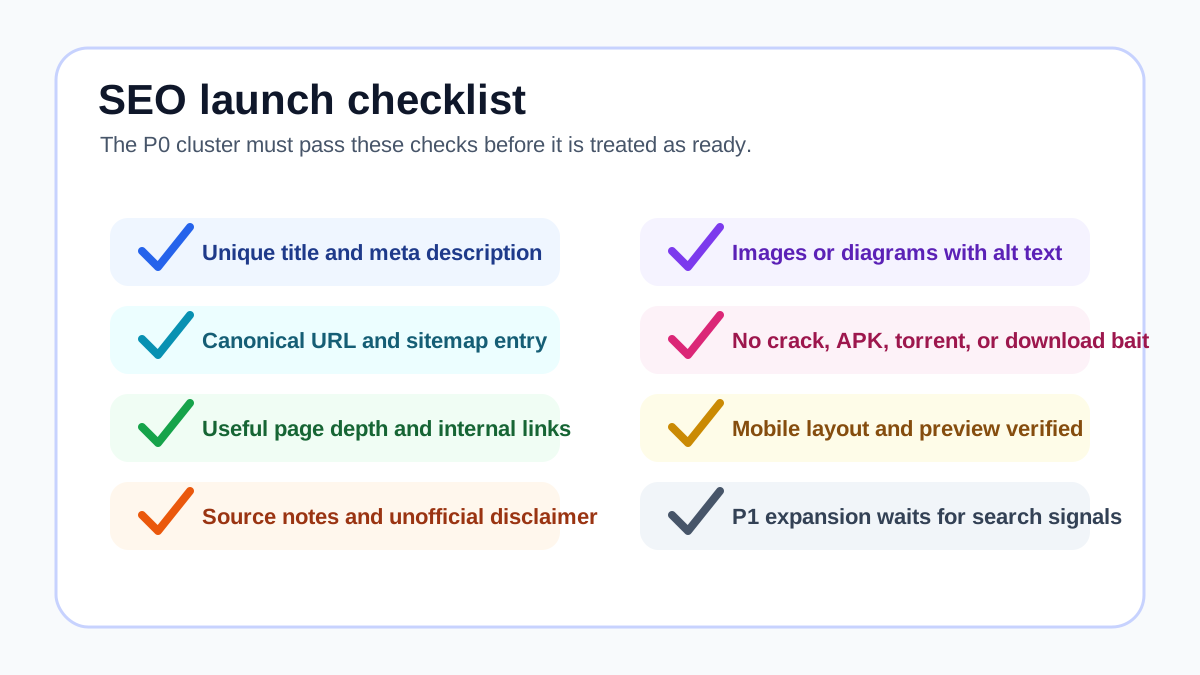
Each P0 URL has a distinct title, description, H1, and search intent: guide hub, player count, how to play, Hider tips, and maps.
Every P0 page uses a canonical URL under /games/meccha-chameleon/ and is expected to appear in the generated public sitemap.
Pages include role strategy, map-pattern logic, player-count interpretation, troubleshooting, FAQs, and internal next-step links.
Production visuals are original SVG diagrams with descriptive alt text; official screenshots remain research references until reuse is approved.
The cluster avoids official-looking branding, crack/APK/torrent language, and includes an unofficial fan-guide disclaimer.
Seeker tips, exact hiding spots, Workshop maps, review, and multiplayer troubleshooting stay P1 until Search Console or user data confirms demand.
Do not publish thin pages just because a keyword exists. Each new URL below needs a Search Console trigger or a verified data source so the page has unique information gain.
Trigger: GSC shows seeker, find hiders, or seeker tips impressions.
Data needed: Role-specific counterplay examples and tested scan-order notes.
Trigger: GSC shows best hiding spots demand and the team can test spots or collect community evidence.
Data needed: Original diagrams, map context, and proof that spots are not invented.
Trigger: Workshop map queries or Steam Workshop popularity data become available.
Data needed: Map names, update dates, player-count fit, fairness scoring, and official Workshop links.
Trigger: Worth it, review, price, or buy-intent queries appear in Search Console.
Data needed: Price history, review signal, player activity, and clear official purchase path.
Trigger: Server, queue, lobby, or multiplayer error impressions appear.
Data needed: Repeatable troubleshooting flow and explicit unofficial-support disclaimer.
Image sourcing note
The pages now use official Steam store images as externally linked visual references, with source captions and links back to the official Steam page.
Original SVG diagrams remain in the guide as strategy explainers, while Steam images handle the game-recognition and screenshot needs.
Trailer, gameplay, and tutorial videos are linked as external YouTube cards instead of autoplay embeds to reduce page weight and attribution risk.
No. This is an unofficial guide page. Use the official Steam store for purchasing, updates, reviews, and developer information.
Start with the how-to-play page, then read Hider tips if you keep getting found or the maps guide if you need better hiding-spot logic.
No. The cluster intentionally avoids crack, torrent, APK, and free-download queries. Buy the game through Steam.
This is an unofficial fan guide for MECCHA CHAMELEON. All game names, trademarks, and assets belong to their respective owners. Buy the game from the official Steam store.
Open the official Steam store →